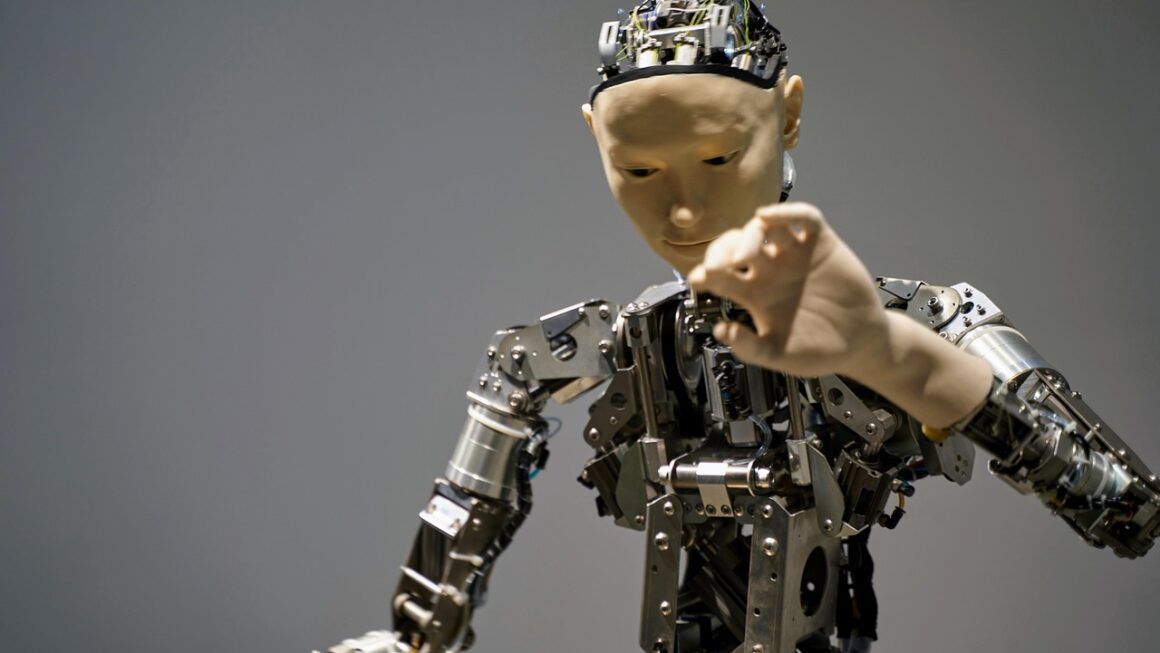
Artificial Intelligence is no longer a futuristic concept confined to the pages of science fiction; it is the fundamental infrastructure powering the modern digital economy. From the algorithms that curate our social media feeds to the sophisticated language models drafting professional correspondence, AI is evolving at an unprecedented pace. As we stand on the precipice of a new technological era, understanding where AI is heading—and how it will reshape our professional and personal lives—is essential for staying relevant in an increasingly automated world.
## The Rise of Agentic AI and Autonomous Systems
The next phase of AI evolution is moving beyond simple chatbots and text generators toward Agentic AI. Unlike current generative models that wait for user prompts, autonomous agents are designed to pursue complex goals, break down tasks, and execute them across multiple platforms without constant human supervision.
### How Autonomous Agents Change Workflow
These agents act as “digital employees” capable of managing administrative complexity. For example, a travel agent AI won’t just suggest a flight; it will search for prices, negotiate the best rate, book the tickets, and sync the itinerary with your calendar.
- Task Decomposition: Agents can break a goal like “organize a company event” into sub-tasks such as booking venues and inviting guests.
- Tool Integration: Seamless operation across software suites like Slack, Salesforce, and Microsoft 365.
- Continuous Learning: Adapting based on previous successes and failures in task execution.
Actionable Takeaway: Begin auditing your daily operational tasks. Identify which repetitive processes could be handled by future autonomous systems and prepare your data workflows to integrate with these agents.
## Generative AI in Creative and Scientific Discovery
Generative AI is shifting from a tool for drafting emails to a powerhouse for innovation. In sectors like pharmaceuticals and material science, AI models are simulating molecular structures to discover life-saving drugs in weeks rather than years.
### Accelerating Innovation
In the creative sector, AI is becoming a co-pilot that enhances human intent. By analyzing vast historical datasets, AI can help architects design more sustainable buildings or assist composers in drafting complex symphonic scores.
- Drug Discovery: AI models predict protein folding, significantly shortening the research and development phase for new medicines.
- Generative Design: Engineers input project constraints, and AI generates hundreds of design iterations to find the most efficient solution.
- Content Personalization: Marketing teams now use AI to generate thousands of unique ad variations tailored to specific buyer personas.
Actionable Takeaway: If you work in R&D or content creation, integrate AI tools into your prototyping phase to exponentially increase the number of experiments you can run.
## The Future of AI Ethics and Regulation
As AI capabilities expand, the conversation surrounding safety and ethics is becoming a critical priority for governments and corporations alike. The focus is shifting toward “Responsible AI,” which prioritizes transparency, bias mitigation, and data privacy.
### Building Trustworthy Systems
Regulatory frameworks, such as the EU AI Act, are setting the standard for how AI systems should be audited. This ensures that the systems governing decisions in finance, healthcare, and law are explainable and fair.
- Explainability: Developing models that provide a clear “reasoning” for their output.
- Bias Mitigation: Implementing rigorous data scrubbing techniques to remove systemic prejudices from training sets.
- Data Sovereignty: Ensuring that personal and intellectual property is protected within AI training loops.
Actionable Takeaway: Before adopting enterprise AI solutions, verify that the provider has clear governance policies regarding data security and algorithmic transparency.
## AI-Driven Personalization in Education and Healthcare
The “one-size-fits-all” approach to services is rapidly becoming obsolete. The future of AI is highly personalized, offering bespoke experiences that cater to individual needs, health markers, and learning styles.
### Transforming Human Services
In education, AI tutors provide real-time feedback to students, adapting the curriculum to their pace. In healthcare, “digital twins” and predictive analytics allow for precision medicine, where treatments are designed based on an individual’s specific genetic profile.
- Adaptive Learning: AI platforms adjust content difficulty based on student mastery in real-time.
- Predictive Health: Wearable devices paired with AI can flag cardiovascular issues long before a patient displays symptoms.
- Mental Health Support: AI-powered interfaces provide 24/7 support for behavioral health through sentiment analysis and crisis intervention.
Actionable Takeaway: Leverage AI-driven professional development platforms that analyze your current skill set to suggest personalized learning paths for career advancement.
## Human-AI Collaboration: The New Workforce Paradigm
The fear that AI will replace humans is increasingly being replaced by the understanding that AI will replace people who don’t use AI. The future of the workforce will be defined by “Augmented Intelligence,” where machines handle data-heavy tasks and humans focus on high-level strategy, empathy, and creative problem-solving.
### Skills for the AI Age
The demand for purely technical roles will shift toward roles that emphasize “human-centric” capabilities. Organizations will prioritize employees who can effectively manage and “prompt” AI systems to achieve specific business outcomes.
- Prompt Engineering: Mastering the art of communicating intent to LLMs.
- Strategic Thinking: Using AI data insights to form long-term business strategies.
- Emotional Intelligence: Focusing on roles that require high empathy and nuanced human connection, which AI cannot replicate.
Actionable Takeaway: Cultivate your “soft skills” and strategic management capabilities; these are the areas where human value will command the highest premium in the coming decade.
## Conclusion
The future of AI is not a destination but an ongoing journey of transformation. From the rise of autonomous agents that streamline our workflows to the ethical frameworks ensuring responsible use, AI is poised to touch every facet of human existence. By embracing these changes—rather than resisting them—professionals and businesses can harness the immense power of artificial intelligence to drive innovation, enhance productivity, and improve lives. The key to thriving in this new age lies in curiosity, adaptability, and a commitment to keeping human value at the heart of technological progress.